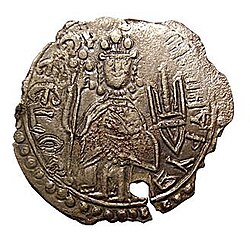
Decoding Vladimir the Great: Legacy, Faith, and East Slavic Law
In the annals of East Slavic history, few figures loom as large or cast as long a shadow as Vladimir the Great. Grand Prince of Kiev from 980 to 1015, Vladimir's reign marked a seismic shift in the cultural, political, and spiritual landscape of Kievan Rus'. It was a period that saw the tumultuous transition from age-old Slavic paganism to the embrace of Orthodox Christianity, fundamentally reshaping the identity of the East Slavs and laying the groundwork for the modern nations of Russia, Ukraine, and Belarus. But who was Vladimir Svyatoslavich, and what truly motivated the decisions that defined his era?
The Ascent to Power and Pagan Roots
Born around 958, Vladimir Svyatoslavich arrived on the world stage under somewhat unconventional circumstances. He was the illegitimate son of Grand Prince Sviatoslav I and Malusha, a Kievan woman of uncertain status, possibly a servant or concubine. This lineage initially placed him in a precarious position within the ruling hierarchy. However, Vladimir possessed a formidable will and a keen strategic mind, qualities that would soon propel him to the apex of power.
Following the death of his father in 972, Kievan Rus' was plunged into a brutal period of fratricidal conflict. Vladimir, despite his initial disadvantages, emerged victorious from this bloody struggle, seizing control of Kiev in 980. His early rule was characterized by a robust assertion of pagan identity. Understanding the need to unify the disparate tribes under his dominion, Vladimir initially pursued pagan reforms, notably constructing a grand pantheon of idols in Kiev. This move was not merely an act of piety; it was a shrewd political maneuver designed to consolidate power, assert a common identity among his subjects, and elevate his own status as the supreme leader of a united pagan realm. This initial phase demonstrates Vladimir's pragmatic and often ruthless approach to governance, prioritizing stability and control above all else.
The Transformative Choice: Conversion to Orthodoxy
The year 988 stands as the single most pivotal date in the history of Kievan Rus', marking the official adoption of Byzantine Christianity. This wasn't a sudden, impulsive decision by Vladimir, but rather the culmination of strategic deliberations. According to primary accounts, most notably the Russian Primary Chronicle, Vladimir dispatched emissaries to evaluate various religions, including Islam, Judaism, Western Christianity, and Eastern Orthodoxy. While these narratives undoubtedly blend historical events with hagiographic elements intended to idealize his conversion motives, they underscore the strategic thinking behind his choice.
The alliance forged with Byzantine Emperor Basil II was instrumental. Vladimir provided crucial Varangian mercenaries to the emperor, who was facing internal rebellions. In return, Vladimir secured a marriage to Anna Porphyrogenita, Basil II's own sister. This was an unprecedented diplomatic coup for a relatively young and "barbarian" state like Kievan Rus'. Marrying into the Byzantine imperial family instantly elevated Vladimir's international standing, integrating Kievan Rus' into the sophisticated political and cultural orbit of Byzantium.
Following this alliance, the mass baptism of his subjects in the Dnieper River commenced, symbolically washing away centuries of pagan belief. Pagan temples were systematically destroyed, and Christian churches began to rise in their place. This dramatic shift was not just a religious conversion; it was a profound socio-political reorientation that distanced Kievan Rus' from the pagan traditions of its past and the Latin West, firmly aligning it with the Eastern Orthodox world. For a deeper dive into the mechanics and implications of this monumental event, explore Vladimir the Great: How One Prince Christianized Kievan Rus'.
Consolidating Power and Forging a State: Vladimir's Reforms
With Christianity firmly established, Vladimir's efforts turned towards consolidating his newly Christianized state and modernizing its governance. His rule was characterized by a multi-pronged approach that encompassed military expansion, legal innovation, and institutional development.
- Military Campaigns: Vladimir continued his father's legacy of military prowess, engaging in campaigns that expanded Rus' territories. Crucially, he defended his borders against nomadic incursions, particularly from the Pechenegs, securing the fledgling state against external threats and allowing for internal development.
- Legal Foundations: Perhaps one of his most lasting, yet often debated, contributions was the promulgation of the first known East Slavic legal code. This foundational legal framework, designed to regulate societal relations and enforce Christian principles, marked a significant step away from tribal customs towards a more unified and codified system of justice. While the full *Russkaya Pravda* is often associated with his successors, Vladimir's era undeniably initiated the critical process of formalizing law in Kievan Rus'. This was a practical step towards creating a more orderly and governable society, essential for a nascent state.
- Architectural & Ecclesiastical Development: The physical manifestation of the new faith was crucial. Vladimir commissioned the erection of stone churches, such as the magnificent Church of the Tithes in Kiev. These architectural marvels were not just places of worship; they were symbols of the new state's power, wealth, and sophisticated cultural alignment. They solidified Christianity's institutional presence, providing centers for education, administration, and spiritual life, thus embedding the new faith deep within the fabric of society.
These reforms collectively illustrate Vladimir's foresight. He understood that a strong state required not only military might but also a unifying ideology, a common legal framework, and visible institutions to cement its authority and cultural identity. His strategic decisions offered a blueprint for future East Slavic rulers on how to effectively integrate religion, law, and military strength to build a lasting realm.
The Enduring Legacy of Vladimir the Great
The legacy of Vladimir the Great is multifaceted and continues to resonate deeply across Eastern Europe. He is venerated as a saint in the Eastern Orthodox Church, celebrated as the Baptizer of Rus' and the spiritual progenitor of the East Slavic nations. His conversion of Kievan Rus' irrevocably shaped its destiny, steering it towards a unique path distinct from the Latin West and profoundly influencing its art, architecture, literature, and political thought for centuries to come.
Vladimir stands as a foundational figure in the historical narratives of Russia, Ukraine, and Belarus. Each nation interprets his legacy through its own historical lens, but all acknowledge his pivotal role in their spiritual and political genesis. It is important, however, to approach primary accounts like the Russian Primary Chronicle with a critical eye, recognizing that they often blend genuine historical events with hagiographic elements. These idealized portrayals of his conversion motives, while rich in symbolic meaning, remind us that history is often filtered through the perspectives of those who record it.
The impact of Vladimir's actions in the 10th century continues to be felt today, influencing geopolitical dynamics, cultural identities, and religious affiliations. His decision to adopt Orthodox Christianity established a spiritual and cultural bond that, despite historical vicissitudes, has played a significant role in the region's identity. For an exploration of how Vladimir's ancient conversion still echoes in modern times, consider reading Vladimir's Reach: From Ancient Conversion to Modern Russian Influence.
In conclusion, Vladimir the Great was far more than just a prince who changed his faith. He was a shrewd political operator, a military leader, a visionary reformer, and ultimately, a transformative figure who laid the bedrock for a major European civilization. His legacy is a complex tapestry woven from ambition, faith, and statecraft, ensuring his enduring place as a titan of East Slavic history.